
Leaving the Armed Forces? Here's you guide to getting into Telecoms
Leaving the Armed Forces is a significant milestone. After years of service, discipline and dedication, the transition into civilian employment can feel both exciting and uncertain. Many service leavers are searching for a career that offers purpose, progression, practical work and the opportunity to build on the valuable skills they have developed during military service.
For many, telecommunications is exactly that career.
The UK's telecoms industry continues to grow as businesses, governments and communities invest heavily in full fibre broadband, 5G infrastructure, data centres, enterprise networking and critical digital infrastructure. Behind every fibre optic cable, communications cabinet, business network and broadband connection are skilled engineers who install, test and maintain the systems that keep the country connected.
Military personnel already possess many of the qualities employers are actively searching for. Teamwork, leadership, problem-solving, technical aptitude, adaptability and the ability to perform under pressure are all essential within telecoms. With the right training, these existing strengths can become the foundation for a rewarding new civilian career.
Whether you served in the Army, Royal Navy or Royal Air Force, telecoms offers opportunities across the UK in roles that value professionalism, attention to detail and a mission-focused mindset.
At Fibre Optics Training, we have developed specialist HM Forces resettlement training courses designed specifically to help service leavers gain recognised industry skills and transition into employment with confidence.
A Career That Keeps You Active
Not everyone wants to swap an active military lifestyle for a desk-based job. After years of working in varied environments, overcoming challenges and being part of a team, many Armed Forces leavers look for a career that keeps them engaged, both mentally and physically.
Telecommunications offers exactly that.
No two days are ever the same. One day you could be working on a new business development, the next supporting the rollout of full fibre broadband, upgrading a data centre or helping connect critical infrastructure. Projects vary in size and complexity, giving engineers the opportunity to continually develop their skills while working in different locations across the UK.
The role combines technical knowledge with practical hands-on work. You'll spend time installing equipment, interpreting network plans, testing systems and ensuring everything is performing to industry standards. It's a career where you can see the results of your work, knowing the network you've helped build will support businesses, communities and essential services.
Depending on your chosen specialism, you could be involved in:
Installing fibre optic cables for broadband and communications networks.
Building enterprise network infrastructure within offices, schools, hospitals and commercial buildings.
Testing fibre optic links using specialist equipment to verify performance.
Working in modern data centres, supporting the infrastructure behind cloud computing and digital services.
Commissioning communication systems before they go live.
Installing structured cabling systems for voice, data and wireless networks.
Supporting nationwide broadband deployment projects.
Upgrading and maintaining existing telecommunications infrastructure.
Many telecoms roles also provide opportunities to work outdoors as well as indoors. Engineers may spend time in office buildings, industrial facilities, data centres, construction sites or alongside new infrastructure developments. For those who enjoy variety and don't want every day to look the same, telecoms offers a rewarding balance between technical problem-solving and practical engineering.
Another attraction for many service leavers is the sense of purpose. Every installation contributes to keeping people connected, supporting businesses, enabling emergency services, improving digital access and helping build the UK's future communications network. The work is meaningful, and the projects you complete have a lasting impact.
Why Military Skills Transfer So Well Into Telecoms
One of the biggest concerns for many service leavers is whether their military experience will be recognised by civilian employers.
The reality is that many of the core competencies developed during military service are exactly what telecoms employers look for.
Discipline and Professional Standards
Successful telecoms engineers work to strict industry standards and installation procedures. Whether completing fibre optic splicing, network testing or structured cabling installations, following processes accurately is essential.
Military personnel are already accustomed to working within structured procedures, maintaining high standards and completing tasks correctly the first time.
This level of professionalism is highly valued throughout the telecoms industry.
Working as Part of a Team
Telecommunications projects rarely involve working alone. Large-scale fibre deployments, enterprise network installations and infrastructure upgrades require engineers, supervisors, project managers and clients to work together effectively.
The ability to communicate clearly, support colleagues and contribute to a team objective is something Armed Forces personnel develop throughout their careers. This experience often allows service leavers to integrate quickly into telecoms teams.
Problem Solving Under Pressure
Telecoms engineers frequently encounter unexpected challenges.
An underground duct may be blocked, existing infrastructure may differ from drawings or a fibre fault may require investigation before work can continue.
Employers value engineers who remain calm, assess the situation logically and identify practical solutions. Military training develops precisely this type of structured decision making. Rather than becoming overwhelmed by problems, service leavers are often confident analysing situations and adapting their approach.
Technical Aptitude
Many military roles involve working with communications systems, electronics, IT equipment, vehicles, engineering systems or specialist technologies.
Even if your previous role wasn't directly related to telecommunications, becoming familiar with technical equipment and learning new systems quickly provides an excellent foundation for telecoms training.
The industry values people who enjoy understanding how technology works and take pride in completing technical tasks to a high standard.
Leadership and Responsibility
Whether you've led a small team or managed larger operations, leadership skills remain valuable throughout your civilian career.
Telecoms companies regularly promote experienced engineers into positions such as:
Team Leader
Supervisor
Project Coordinator
Network Manager
Operations Manager
Training Instructor
For many service leavers, telecoms offers clear progression rather than simply another job.
What Does a Telecoms Engineer Actually Do?
One of the reasons telecoms appeals to Armed Forces leavers is the variety of work available.
Depending on your training and career path, a telecoms engineer could be responsible for installing fibre optic networks, building structured cabling systems, connecting businesses, testing communication infrastructure or supporting major broadband rollouts.
Common responsibilities include:
Installing fibre optic cables
Fusion splicing fibre
Testing fibre networks using specialist equipment
Installing enterprise structured cabling
Building communications cabinets
Installing patch panels
Fault finding network issues
Reading technical drawings
Completing installation documentation
Working safely on live infrastructure
Many of these tasks combine practical engineering with technical knowledge, creating an engaging and rewarding role that continues to evolve alongside new technologies.
A Sector With Real Career Progression
One of the greatest advantages of building a career in telecommunications is the opportunity to keep progressing. Unlike some industries where advancement can be limited, telecoms offers multiple pathways for engineers to develop their skills, gain additional qualifications and move into increasingly senior positions.
Many people begin with an entry-level role after completing their training, learning from experienced colleagues while building confidence on live projects. As experience grows, engineers often specialise in areas such as fibre optic installation, fusion splicing, network testing, structured cabling or data centre infrastructure, allowing them to work on larger and more technically demanding projects.
A typical career pathway might look like this:
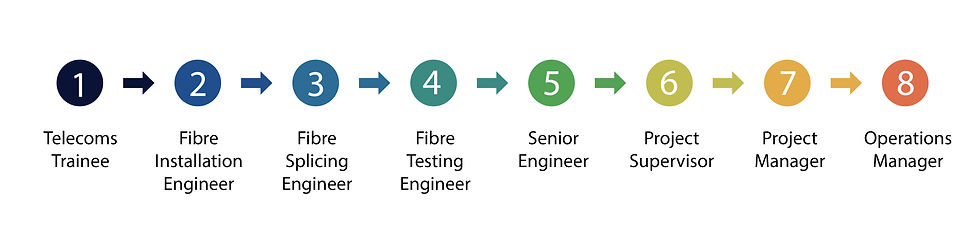
This progression isn't fixed, and every engineer's journey is different. Some professionals choose to specialise in technical disciplines, becoming recognised experts in fibre testing, network commissioning or enterprise cabling. Others move into leadership roles where they manage teams, oversee major infrastructure projects and work directly with clients.
There are also opportunities to diversify into related sectors. Experience gained in telecoms can open doors within data centres, utilities, rail, construction, renewable energy, defence infrastructure and large-scale commercial developments, all of which rely on robust communications networks.
For those with an entrepreneurial mindset, telecoms also offers the potential to become self-employed or establish a specialist contracting business. Many experienced engineers go on to provide installation, testing or maintenance services to network operators, construction companies and businesses across the UK.
As investment in full fibre networks, 5G, AI infrastructure, enterprise connectivity and digital transformation continues, the demand for experienced telecoms professionals shows no signs of slowing down. This means that the skills you develop today can support a long-term career with excellent opportunities for progression, increased responsibility and higher earning potential.
For Armed Forces leavers who are used to continuous professional development and taking on new challenges, telecoms provides a career where learning never stops. New technologies, evolving standards and increasingly complex networks ensure there are always opportunities to expand your expertise and take the next step in your career.
The Demand for Fibre Optic Engineers Continues to Grow
Modern life depends on reliable, high-speed connectivity. From the broadband that keeps homes connected to the networks supporting businesses, hospitals, transport systems and data centres, digital infrastructure has become essential to almost every aspect of daily life.
As technologies such as cloud computing, artificial intelligence (AI), smart cities and connected devices continue to evolve, the demand for skilled fibre optic engineers and network infrastructure professionals continues to grow. These technologies all rely on robust fibre networks that must be installed, tested and maintained by qualified engineers.
For Armed Forces leavers, this creates an opportunity to enter a sector with genuine long-term prospects. Rather than joining an industry in decline, you'll be building the infrastructure that will support the UK's economy and digital future for decades to come, offering stability, progression and the chance to work on projects that make a real difference.
Why Choose Specialist HM Forces Telecoms Training?
Transitioning into a new industry is much easier when you receive training designed specifically for your background.
At Fibre Optics Training, our HM Forces programmes are created to help service leavers gain practical, industry-relevant skills that employers are looking for.
Training is delivered by experienced instructors with extensive industry knowledge, combining classroom learning with hands-on practical exercises in purpose-built training facilities.
Rather than simply learning theory, you'll develop confidence using the same types of equipment, tools and installation methods found on real telecoms projects.
The focus is always on preparing you for employment by building practical competence alongside technical understanding.
HM Forces Fibre Telecommunications Bootcamp
Our HM Forces Fibre Telecommunications Bootcamp has been designed specifically for Armed Forces personnel looking to begin a career within fibre optics and telecommunications.
The course introduces the core skills required by today's telecoms industry, helping learners understand how modern fibre optic networks are built, installed and tested.
Throughout the programme, you'll gain practical experience covering key areas such as:
Fibre optic principles
Cable preparation
Fusion splicing
Connector installation
Fibre testing
Fault finding
Safe working practices
Industry standards
By combining theory with extensive practical sessions, the bootcamp helps build the confidence needed to progress into telecoms employment.
Whether you have previous communications experience or are completely new to fibre optics, the course provides a structured pathway into the industry.
HM Forces Enterprise Network Installer Course
Many organisations also require skilled engineers to install and maintain internal communications infrastructure.
Our HM Forces Enterprise Network Installer course focuses on the installation of structured cabling systems used within commercial buildings, offices, schools, hospitals and data centres.
You'll develop practical skills including:
Copper network installation
Enterprise structured cabling
Cabinet installation
Patch panel termination
Network testing
Standards and best practice
Health and safety
Professional installation techniques
This provides another excellent career route for service leavers who want to work on commercial networking projects across a wide range of industries.
Support Through Your Resettlement Journey
Our team understands the challenges of transitioning into civilian employment and can provide guidance on selecting the most suitable training pathway based on your goals and previous experience.
We can also discuss ELCAS funding, available course dates and the skills that employers are currently looking for within the telecoms industry.
Whether you're several months away from leaving service or already in your resettlement period, we're here to help you take the next step.
Want to talk to us about HM Forces resettlement?
If you're considering a career in telecommunications after leaving the Armed Forces, we'd love to help.
Book a consultation with one of our experienced trainers to discuss your career options.
Explore our HM Forces courses to find the right pathway for your future career.
Visit us at the Armed Forces Career Fair on Thursday 9 July 2026 at Staffordshire County Showground, Stafford.
Your military experience has already given you the mindset to succeed. Let us help you develop the industry skills that employers are looking for.
Frequently Asked Questions
Do I need previous telecoms experience?
No. Our HM Forces courses are suitable for beginners as well as those with communications or engineering experience gained during military service.
Can I use ELCAS funding?
Yes. Eligible service leavers may be able to use ELCAS funding towards our HM Forces training programmes. Contact us to discuss your eligibility.
What jobs could I apply for after completing the courses?
Potential roles include Fibre Optic Engineer, Telecoms Engineer, Network Installer, Structured Cabling Engineer, Fibre Splicer and Network Infrastructure Technician.
Is the training practical?
Yes. Our courses combine classroom learning with extensive hands-on practical exercises using industry-standard equipment in purpose-built facilities.
Which course should I choose?
If you're interested in fibre networks and broadband infrastructure, the HM Forces Fibre Telecommunications Bootcamp is an excellent starting point. If you want to work on business networks and commercial cabling systems, the HM Forces Enterprise Network Installer course may be the better fit.

Comments